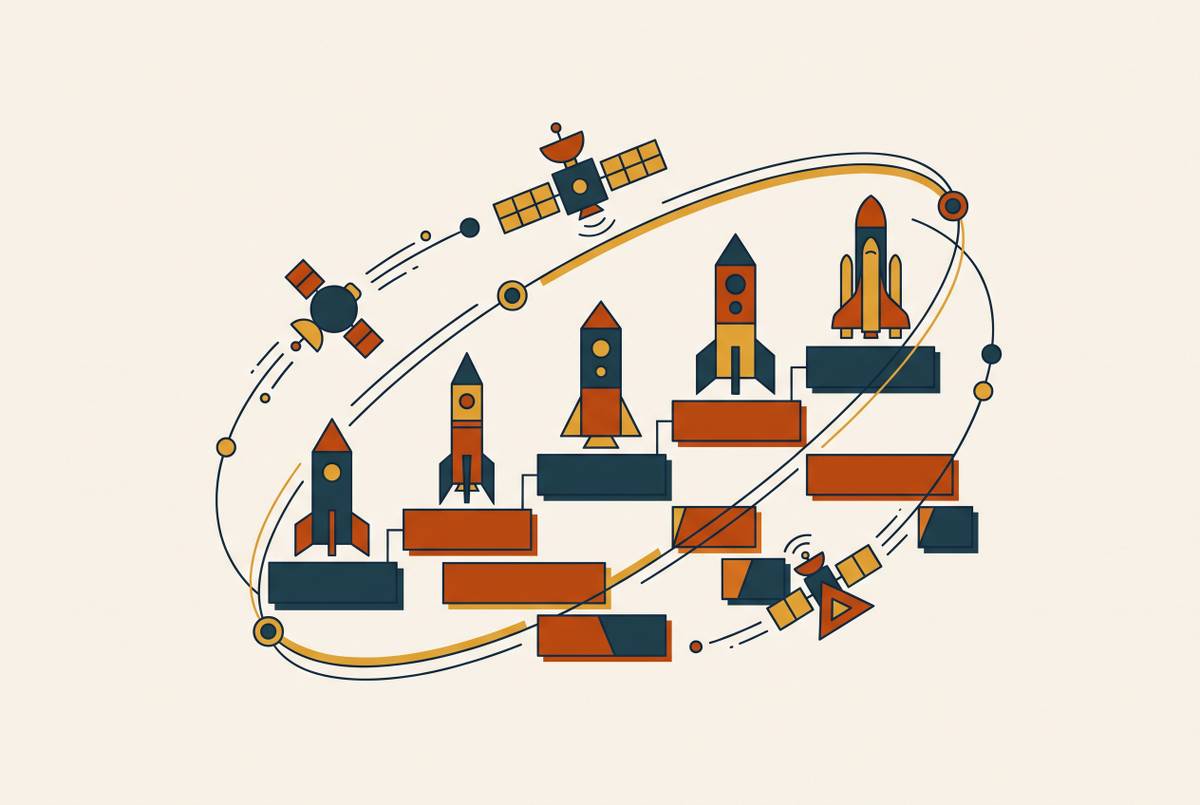
Launch Failure Modes and Their Insurance Triggers
Insurers are excluding autonomous risks rather than pricing them.

Every insurance policy ever written assumes that a person made the decision that caused the loss.
Liability law has long depended on tracing harm back to a human act or omission: someone acted, someone failed to act, someone chose badly. Policy language was built around that same chain. WTW's Andrew Hill frames the real question precisely: not whether a policy responds to "AI" in the abstract, but whether it responds to the specific loss event that AI could cause. Many policy wordings still assume a human was involved in the decision that produced the harm.
Autonomous systems replace that single decision-maker with a sensor array, a trained model, and an actuator stack, and these work in sequence. Fault no longer sits with one party. If no policy was written with a machine decision-maker in mind, each failure mode a machine can produce will activate, or fail to activate, a different line of coverage. Mapping those failure modes to the coverage lines that respond, and the ones that don't, is the task ahead.
Carrier responses: exclusions, not new products
Carriers have not built new products to price the risk of a machine making a consequential decision. They have responded by excluding that risk from the products already on the shelf. Consilium notes that many organizations simply assume their existing liability programs extend to autonomous or robotic operations, and in a significant number of cases they do not.
The Insurance Services Office has issued new endorsements that let insurers exclude losses resulting from generative AI, defined broadly as a machine-based learning system or model trained on data with the ability to create content or responses, including but not limited to text, images, audio, video, or code.
Hill identifies the gap that results with precision: a cyberattack on an autonomous robot that causes property damage could be excluded under a property policy's cyber exclusion, while that same loss falls outside a cyber policy's coverage because of a property damage exclusion written into the cyber policy itself. What follows maps the failure modes an autonomous system can produce to the coverage lines meant to respond to each, and flags where the exclusions already in force eat that coverage before a claim is ever filed.
Hardware malfunction and the general liability trigger
Hardware malfunction is the failure mode operators most reasonably expect general liability to cover. Whether GL actually responds depends on what broke, who was harmed, and whether an AI exclusion sits in the policy.
GL covers third-party claims of bodily injury and property damage, so a robot arm that strikes a worker on a factory floor or a delivery drone that drops cargo onto a parked car can, in principle, trigger the policy. Workers' compensation may cover the injured employee's claim, but product liability claims against the robot's manufacturer or integrator proceed at the same time, and they often name several defendants at once.
The wrinkle that determines coverage is the cause of the malfunction. Hill's framing captures why this matters: losses arising from autonomous AI decision-making can still be covered, provided they fall within the insuring agreement and are not otherwise excluded. That final clause, "not otherwise excluded," carries the weight of the entire coverage determination.
GL was never designed to cover the operator's own property or its own lost production when a malfunction shuts a line down; those exposures sit outside GL entirely and require separate coverage. Third-party component fault complicates the picture further. Axis Insurance notes that when a defect in a supplied sensor or component triggers the failure, the claim often lands on the integrating company rather than the part's original manufacturer, so the integrator's GL policy ends up carrying risk that belongs upstream in the supply chain. What GL leaves uncovered, software-driven decision failures and the financial losses that follow from them, is where the next coverage line is supposed to pick up.
Sensor error and software-driven decision failures: where Tech E&O is supposed to step in
When the failure originates in sensor data, model inference, or software logic rather than a mechanical part, the technology-liability coverage line is the one meant to respond. But autonomous decision chains were not a mainstream risk when standard Tech E&O policies were drafted, so the gaps show.
IMA Financial Group describes how a software error in a manufacturing execution system or a robot control platform can cascade into equipment damage, defective output, or a shutdown across an entire facility. Tech E&O is built to address wrongful acts or performance failures tied to technology, and it fills space that GL and cyber policies often leave open. The failure comes from the sequence as a whole, so policy language built around a single identifiable error does not map cleanly onto it.
Hill identifies the question that decides whether the policy triggers at all: does the policy specify that a human actor must be responsible for the act or event? Contractual liability sharpens the stakes. Coverage for that exposure depends entirely on Tech E&O language reaching software-driven autonomous failures, which is not guaranteed by the mere existence of a Tech E&O policy.
Software versioning adds a moving target to all of this. The same platform carries different risk after an update, and a policy underwritten against version N of a system was not necessarily underwritten to cover the behavior of version N+1. A cyberattack against the model or the data feeding it can produce the identical failure from outside.
Cyberattacks on autonomous systems and the gap between cyber and property policies
A cyberattack that corrupts or seizes control of an autonomous system triggers cyber and property exposures at the same time, and the exclusions written into each policy tend to push the loss toward the other, leaving it unclaimed in both. IMA Financial Group describes the smart factory environment as a tightly linked web of IoT sensors, AI platforms, robotics controllers, and cloud systems, where a single vulnerability can cascade into business interruption and third-party liability claims simultaneously.
Hill's scenario remains the clearest illustration of the structural gap: a cyberattack against an autonomous robot that causes property damage can be excluded under a property policy's cyber exclusion, while that same loss falls outside the cyber policy's own coverage because of a property damage exclusion written into it. The loss lands in the space between the two policies. Closing the gap between cyber and property coverage requires reading both wordings against each other before deployment, when the exclusion language can still be amended, not after a claim has already been filed and denied.
Equipment in the field and in transit: inland marine coverage and its limits
Hardware that moves, drones, mobile robots, autonomous vehicles, spacecraft waiting on the pad, falls under inland marine coverage, built for property in transit and for mobile or unique equipment that standard property forms do not adequately address. It is the natural line for hardware that travels between facilities or operates away from a fixed location.
Inland marine does not cover third-party bodily injury or property damage; that remains GL's responsibility. For autonomous hardware specifically, the cause-of-loss analysis recurs in a familiar form: if equipment is damaged because the system made a navigation error or acted on corrupted sensor data, the inland marine policy responds only if that loss qualifies as a covered peril under the policy's wording, or fails to respond if an AI-related exclusion has been written into it. That same cause-of-loss question becomes far more consequential once the hardware in question is sitting on a launch pad.
Launch failure as a coverage category
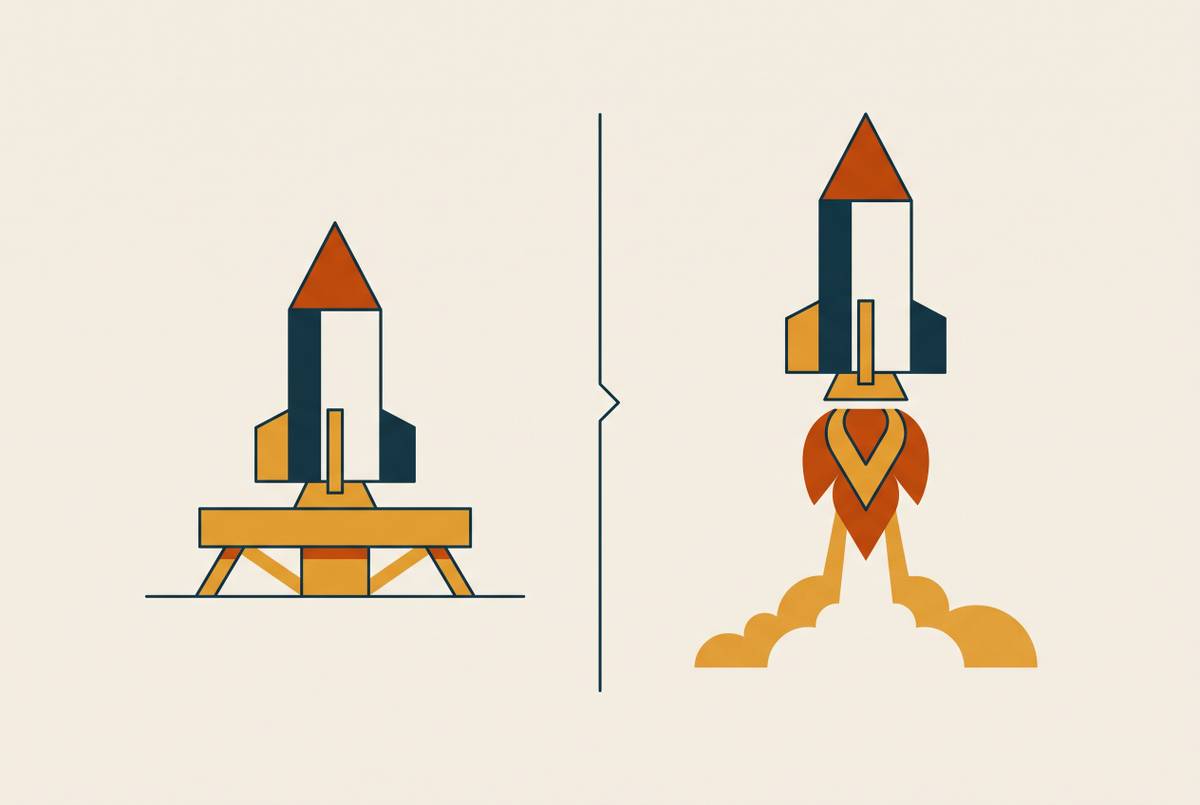
A launch failure is rarely a single insurance event. It triggers multiple coverage lines simultaneously, and which one responds depends on where in the launch sequence the failure happens and what the vehicle did autonomously in the seconds before the loss.
Launch phase losses require dedicated launch insurance. Commercial launch providers operating under a national launch licensing regime must purchase third-party liability coverage up to a level the regulator calculates based on maximum probable loss, because this is a condition of holding a launch license. That requirement sets a regulatory floor for third-party liability; it does not cover the operator's own vehicle or payload, which requires separate first-party coverage placed on top of it.
Autonomous decision failures during ascent sit at the intersection of several coverage questions at once. Getting coverage bound at all depends on the quality of the underwriting submission: technical documentation, flight heritage records, and failure mode analysis are what allow an underwriter to price the risk, and a thin submission is often the reason capacity is unavailable rather than merely expensive.
Supply chain fault allocation when a third-party component fails
When a third-party component causes a failure, the claim frequently lands on the integrating company first, even when the fault sits upstream with the part's original manufacturer. Vendor risk now extends well beyond physical components. Underwriters treat third-party AI vendor risk as the integrator's own risk, so if you cannot show how your external AI vendors handle data, security, and liability, you are carrying an exposure the policy may not have been priced to cover.
Contractual indemnity from a supplier is not insurance. Regulatory change is about to raise the stakes further for any company shipping into a major international market. The EU's revised Product Liability Directive must be transposed into national law by December 9, 2026, and it imposes joint and several liability across the entire supply chain while substantially widening the definition of "product" to include software and digital services. Hardware and AI companies selling into European markets face a statutory liability exposure that their current product liability coverage may not have been written to address, and the integrator can be named as a defendant under that framework even when the underlying fault is clearly upstream.
Underwriting submission quality and claim coverage
Every coverage question raised in this article is actually settled months before any failure occurs, at the point the underwriting submission is built. A submission that does not describe autonomous operations accurately produces a policy that was never underwritten to cover them, regardless of what the declarations page lists.
Manufacturers who cannot answer an underwriter's questions about their autonomous systems clearly tend to face stricter terms: tighter conditions, higher retentions, reduced capacity, or an outright decline. Governance documentation that moves premiums the other way includes AI threat detection, documented red-teaming, alignment with frameworks such as the NIST AI Risk Management Framework, and formal human oversight workflows for agentic AI, and these are the actuarial inputs that set what losses the policy an operator buys actually covers.
Consilium's view of the bespoke London market makes the underlying point directly: those solutions are structured around how the technology actually operates, and the submission has to describe autonomous operations in terms an underwriter can price, something standard broker forms are not built to do. Software versioning belongs in the submission as well, not just in the engineering changelog. As the platform changes, coverage changes with it, and a policy underwritten for one version of a system may say nothing about the version running in production six months later.
A coverage checklist for operators by failure mode
Each failure mode mapped above carries its own coverage requirement, and the gaps between those requirements are where claims get denied.
If hardware malfunction causes third-party bodily injury or property damage, you need general liability confirmed to respond to AI-driven failures, with no AI exclusion endorsement left in place that would eliminate coverage for harm caused by an autonomous decision.
If software error, sensor misread, or an autonomous decision failure causes a client's financial loss or an SLA breach, you need Tech E&O, with the policy language confirmed to reach software-driven autonomous failures rather than requiring a human wrongful act as a condition of coverage.
If a cyberattack or data poisoning event corrupts an autonomous system and causes physical damage or bodily injury, you need a cyber policy confirmed not to exclude bodily injury, and a property policy confirmed not to carry the cyber exclusion that creates the gap Hill identified. Both wordings need to be read together before binding, not separately.
Physical asset loss, hardware in transit, in the field, or waiting on a launch pad, needs inland marine or an equipment floater, with the cause-of-loss language reviewed specifically against the autonomous failure modes that hardware could plausibly experience.
Launch failure, whether a vehicle loss, a range-safety termination, or third-party ground or air damage, needs dedicated launch insurance meeting the FAA's maximum-probable-loss requirement for third-party liability, plus first-party asset coverage for the vehicle itself. In-orbit failures fall outside launch coverage entirely, so you need a separate satellite-in-orbit policy.
If a third-party component fault lands on the integrator, you need product liability coverage that reaches upstream supply chain failures, indemnity provisions confirmed against the supplier's own insurance rather than assumed, and a review of EU Product Liability Directive compliance for any European deployment ahead of the December 9, 2026 transposition deadline.
If D&O exposure arises from AI governance failures, gaps in safety oversight, or disclosures made during a capital raise about autonomous operations, you need management liability coverage reviewed for absolute AI exclusions that would strip coverage for board-level decisions about deploying the system.
Hill's principle holds across every line on this list: avoiding assumptions on coverage is critical. Each policy has to be read against the specific loss scenarios the autonomous system could actually produce, not assumed to respond because the declarations page names the right line of coverage. A broker who reads every policy before it binds, against the real deployment profile of the system rather than a generic description of it, makes this checklist functional. A standard submission placed on a standard form cannot confirm that coverage reaches an autonomous failure mode it never described. The gap between a machine that makes decisions and a policy written for a person who does is closing, but only for operators who close it before the failure happens, not after the claim is filed.